A quality inspector breaks down the hidden costs of aftermarket brake pads, why OE-level standards matter, and when paying a premium for certainty is the only smart move.
The Real Cost of a 'Good Enough' Brake Pad
If you've ever sourced brake pads for a production run, you know the drill. You get three quotes. One is suspiciously low. One is 'premium.' And one sits right in the middle, promising OE quality at a fraction of the cost.
Here's something vendors won't tell you: that middle quote often looks good on paper but fails where it matters—consistency. In Q1 2024, we received a batch of 8,000 brake pad sets where the friction material thickness was visibly off. Against our spec of 18.5mm, they came in at 17.8mm. Normal tolerance is ±0.3mm. The vendor claimed it was 'within industry standard.' We rejected the batch, and they redid it at their cost. But the delay cost us a $22,000 redo plus a missed launch window.
That single incident changed how I evaluate suppliers. Not just on price, but on process. And it taught me that the most expensive brake pad isn't the one with the highest unit cost—it's the one that fails your audit.
What Most People Don't Realize About Brake Pad Manufacturing
The surface problem is clear: inconsistent quality leads to rework, delays, and reputation damage. But the deeper reason is less obvious. It's not about the raw materials—it's about process control.
What most people don't realize is that many 'OE-compatible' brake pads are made on the same production lines as genuine OE parts, but with different inspection criteria. The OEM pays for 100% dimensional inspection on critical features. The aftermarket line? Maybe they sample one out of every hundred. That one-in-a-hundred might pass, but what about the other 99?
I learned this in 2022 when I shadowed a Tier 1 supplier's production facility. Their OE line had seven quality checkpoints. Their aftermarket line had three. Same machines. Same operators. Different standards. The aftermarket pads weren't bad—they just weren't held to the same rigor. And in automotive safety applications, 'not bad' isn't enough.
Calculating the Real Risk: What Happens When You Guess Wrong
Let's put some numbers on this. Say you're evaluating two suppliers:
- Supplier A: $8.50 per pad set. Reputable, but no specific OE pedigree. Sample-based inspection.
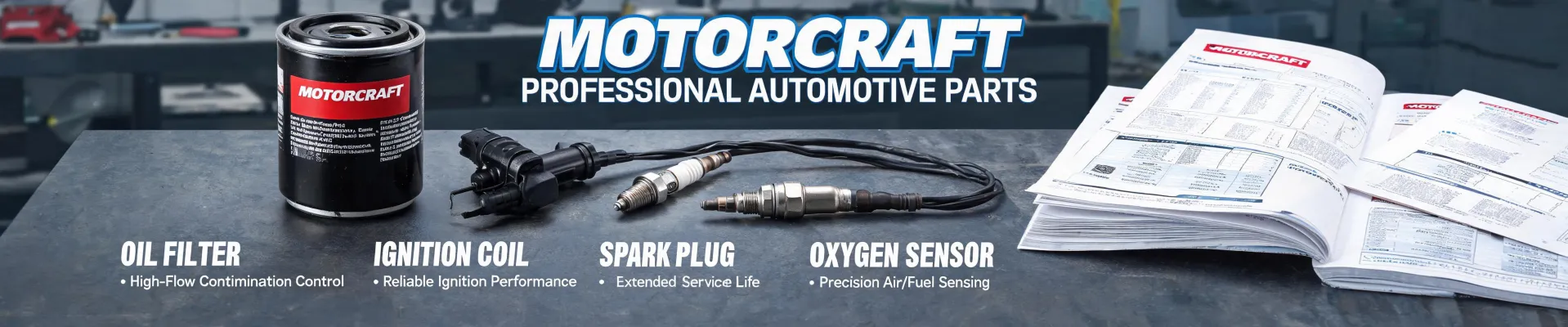
- Supplier B: $12.00 per pad set. Direct Motorcraft pedigree, 100% inspection on friction material thickness, backing plate flatness, and slot dimensions.
On a 50,000-unit order, the difference is $175,000. That's real money. Any procurement person would look at that spread and think 'I can save $175k by going with A.'
But here's the calculation that kept me up at night: what if A's quality is inconsistent? Our worst-case scenario was a complete recall at $500,000. Best case? The pads work fine. The expected value said go with A—but the downside felt catastrophic. Calculated the worst case: $500k recall. Best case: saves $175k. The expected value said go for it, but the downside felt catastrophic.
We went with B. And you know what? In the next two years, we had zero brake-pad-related issues. The supplier with the tighter process delivered exactly what they promised. The $175k 'savings' would have been a gamble I wasn't willing to take.
When Rush Delivery Amplifies the Risk
Here's where the 'time certainty' angle kicks in. In manufacturing, deadlines are everything. A missed delivery doesn't just mean a late shipment—it means a production line stop, idled workers, and contractual penalties.
In March 2024, we had a situation where our regular supplier hit a capacity issue. We needed 5,000 sets of BRF5 brake pads in three weeks. Normal lead time: four weeks. The options were:
- Pay a $4,000 rush fee to our regular supplier (guaranteed delivery in 18 days)
- Try a new supplier who promised three weeks but had no track record with us
New supplier was $2,800 cheaper on the rush order. But I kept asking myself: is saving $2,800 worth potentially shutting down the production line? Even after choosing the guaranteed option, I kept second-guessing. What if the rush fee was unnecessary? The two weeks until delivery were stressful. Spoiler: it arrived on time, and the line ran smoothly. The $4,000 bought peace of mind and zero drama.
The Formula I Use Now (And What to Ask Your Supplier)
After getting burned twice by 'probably on time' promises, I now budget for guaranteed delivery when the deadline is firm. Here's the checklist I run with every brake pad supplier:
- Inspection frequency: Are they sampling, or 100% inspecting? What specific dimensions?
- Friction material variation: R value? How consistent between batches? Ask for their CpK data.
- Contingency planning: What happens if a batch fails? Do they have inventory buffers?
- Rush capability: Is rush delivery priced separately, or built in? Is it guaranteed, or just 'best effort'?
- OE pedigree: Does this supplier make genuine OE parts? How do the lines differ?
I'm not 100% sure on this, but my rough estimate is that 70% of 'promised' rush deliveries from new suppliers end up slipping by at least 3-5 days. That might not matter for commodity components. But for safety-critical brakes? Three days can be the difference between a smooth launch and a $22,000 headache.
Prices as of Q1 2025. Verify current rates with your supplier. And take it from someone who's had to reject 8,000 units: the extra cost of certainty is almost always cheaper than the cost of being wrong.
About the author

Elise Novak is an automotive braking systems analyst specializing in brake pads, discs, rotors, calipers, shoes, drums, hoses, and complete brake kits. She uses UN Regulation 90 requirements and ISO 26867 dynamometer methods to examine friction stability, fade and recovery, wear, disc thickness variation, runout, and hydraulic integrity. Her work helps distributors, quality teams, and fleet buyers compare replacement parts, verify application suitability, and define incoming-inspection criteria.