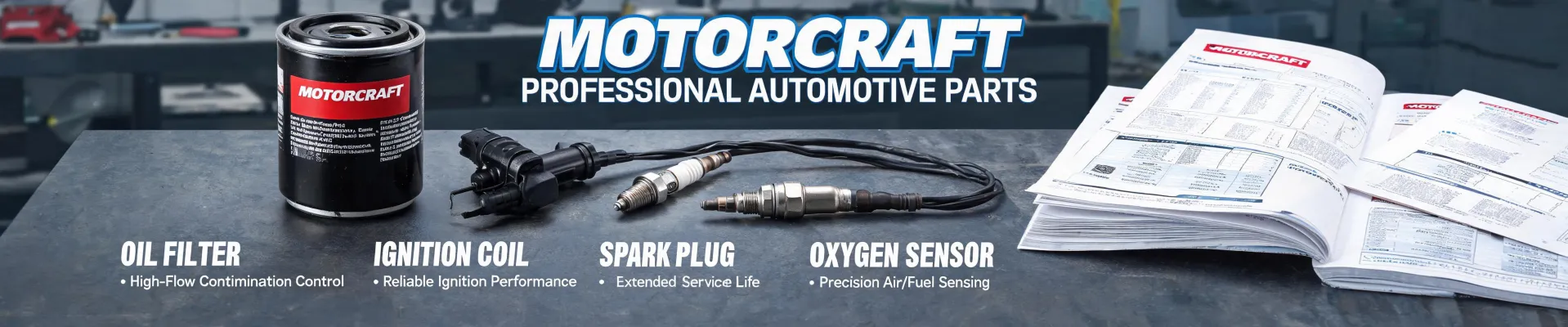
An office administrator's practical checklist for sourcing fleet vehicle parts—oil filters, thermostats, radiators, alternator pulleys—without wasting budget on hidden costs or bad vendors.
-
When This Checklist Makes Sense
-
Step 1: Nail Down the Exact Part Number Before You Search Anywhere
-
Step 2: Get Three Quotes—But Not the Way Most People Do
-
Step 3: Calculate Total Cost—Not Just the Sticker Price
-
Step 4: Verify the Return Policy Before You Click "Buy"
-
Step 5: Check the Production Date on the Part Itself
-
Step 6: Ask About Core Charges Before You Order
-
Step 7: Set Up a Reorder System That Actually Works
-
Common Mistakes (I've Made Most of These)
When This Checklist Makes Sense
If you're the person who orders parts for a company fleet—pickups, vans, service trucks—this is for you. I manage purchasing for a 95-person company with 22 vehicles in the field. That means oil filters, thermostats, radiators, alternator pulleys, the whole lot. Last year alone I processed about 340 parts orders. Some went great. Some didn't.
This checklist is the one I wish I'd had when I started in 2019. It's not about finding the absolute cheapest part. It's about not paying twice for the same mistake.
Total time per order using this process: 15-20 minutes. Time saved on average: 2-3 hours of back-and-forth per problematic order. Worth it.
Step 1: Nail Down the Exact Part Number Before You Search Anywhere
I can't tell you how many times I've watched a colleague search "oil filter for F-250" and end up with the wrong thread size. It's painful.
What most people don't realize is that vehicle year, engine size, and trim level all change the part number. A Motorcraft FL2016 oil filter fits a specific range of Ford engines. Order one for the wrong engine code and it won't seal properly. You'll be dealing with leaks and a mechanic who's now charging you for the redo.
Here's what I do: I keep a spreadsheet with every vehicle's VIN, engine code, and the last three part numbers I've ordered for it. When I need a thermostat, I don't search by make and model. I search by the exact part number I already know works—like the Motorcraft RT1203 for our 2018 Transit 250s.
If you don't have that history yet, start with the VIN. Call a dealership parts counter and ask them to look it up. Yes, it takes 5 minutes. It'll save you 30.
Step 2: Get Three Quotes—But Not the Way Most People Do
The standard advice is "get three quotes." But here's the thing: if you're comparing three prices for the same part number, you're already doing it wrong.
I learned this after a radiator order for a 2016 F-150. I got three quotes: $185, $210, and $240. I went with the $185. Big mistake. That quote didn't include the $35 shipping, the $15 "oversize handling fee," or the fact that returns would cost me 25% restocking. The $210 quote from Paducah Radiator was all-inclusive—shipping, no restocking fee, and they included the mounting hardware. I should've done the math.
Now I ask every vendor for a quote that includes these five lines:
- Part cost
- Shipping (and whether it's expedited or standard)
- Core charge (if applicable—radiators and alternators often have this)
- Return policy (restocking fees, return window)
- Lead time (business days, not vague promises)
If a vendor won't break those out, that's your answer. Move on.
Step 3: Calculate Total Cost—Not Just the Sticker Price
I'm not an accountant, but I report to one. So I learned quickly that the cheapest part on paper is rarely the cheapest in reality.
Let's say you need an alternator pulley removal tool. You find one for $28 plus $12 shipping. Total: $40. The next option is $42 with free shipping. Total: $42. Looks like a $2 difference. But the $28 tool ships from overseas with a 3-week lead time. The $42 one ships from Ohio in two days.
Now factor in time. If your vehicle sits idle for three extra weeks, that's a loaner vehicle cost or a delayed service call. I've learned to put a dollar figure on downtime—for us, it's about $140 per day per vehicle that can't be used.
So that "cheaper" tool actually cost $140 × 21 days = $2,940 in lost productivity. The $42 tool arrived in two days and paid for itself before the cheap one even shipped.
Simple version: compare the all-in cost plus the cost of delay. That's your real number.
Step 4: Verify the Return Policy Before You Click "Buy"
This is the step most people skip. I used to skip it too.
In 2022, I ordered what I thought was the right thermostat for a company Ranger. Turns out I'd grabbed the wrong part number. When I went to return it, the vendor's policy said "30-day returns, 20% restocking fee, customer pays return shipping." The part was $46. With fees and shipping, I netted back about $22. And I still needed to buy the right part.
Now I ask three questions before any non-trivial order:
- What's the return window? (Is it calendar days or business days?)
- Is there a restocking fee? (What percentage?)
- Who pays return shipping? (Sometimes it's negotiable before you order.)
Some vendors—especially smaller ones—won't advertise this. But if you ask directly, they'll usually tell you. And if they won't, that's a red flag about how they'll handle a problem later.
Step 5: Check the Production Date on the Part Itself
This one is from my old boss. She'd been doing fleet maintenance for 15 years before I took over, and she caught something I never would have thought to look at.
Rubber parts—belts, hoses, seals—degrade over time. A "new" belt that's been sitting on a shelf for four years is not the same as one manufactured last month. Most vendors don't track this. But some do, and they'll tell you if you ask.
For our vehicles, I try to avoid rubber components older than 18 months. It's not always possible. But when I'm comparing two vendors with similar pricing, I'll ask: "What's the production date on the current stock?" The one that can answer that question is usually the one with better inventory controls overall.
This applies to oil filters too, by the way. The filter media inside can absorb moisture over time if the packaging isn't sealed properly. Again—not something most vendors will volunteer. But they'll answer if you ask.
Step 6: Ask About Core Charges Before You Order
Core charges are one of those things that surprise people. You buy a rebuilt alternator, and there's a $60 core charge. You only get that $60 back if you return the old alternator in the same box, with the same paperwork, within a certain window.
Miss the window? You just paid $60 for nothing.
I keep a whiteboard in my office with two columns: "Core Due Out" and "Core Due Back." When a part goes out to a mechanic, I write the return deadline. When the core comes back, I erase it. Sounds basic. It is. But I've saved us probably $400 in the last two years just by not missing those deadlines.
Ask the vendor: "What's the core charge, what's the return window, and what condition does the core need to be in?" Get it in writing. Email is fine.
Step 7: Set Up a Reorder System That Actually Works
After you've done steps 1-6 a few times, you'll notice patterns. Same oil filter every 3 months. Same belts every 18 months. Same brake pads every other quarter.
The last thing you want is to be scrambling at 4:30 on a Friday because someone just told you a truck is down and needs a part by Monday.
Here's what I do: I keep a simple spreadsheet with three columns—part number, average lifespan, last order date. When a part is 75% through its expected life, I order the next one. It sits on the shelf until needed. No rush fees. No expedited shipping. No panic.
I know some people think this ties up budget. But you know what costs more? Overnight shipping on a $46 thermostat because you forgot to plan ahead. I've done it. More than once.
Common Mistakes (I've Made Most of These)
Assuming "OEM" always means "better." For some parts—sensors, electronic components—it does. For others, like certain filters and belts, the aftermarket equivalents are made in the same factories. The difference is branding, not quality. Do your homework on the specific part.
Not writing down what worked. If you find a vendor who ships fast, has clean invoicing, and doesn't nickel-and-dime you on returns, write that down. I have a "Preferred Vendors" tab in my spreadsheet with notes like "great for radiators, slow on filters" or "best pricing on Motorcraft, but call to confirm stock." That institutional memory is worth more than any single discount.
Ignoring the invoice format until it's too late. I mentioned this earlier, but it's worth repeating. If finance can't process the invoice, you didn't save money—you created a problem. I ask upfront: "Can you send a proper invoice with our PO number on it?" If the answer is anything other than "yes," I keep looking.
Buying "universal fit" parts. If a listing says "fits most vehicles" for a thermostat or a radiator, close the tab. There's no such thing. You'll spend more making it work than you would've spent on the right part.
That's the checklist. Seven steps, about 20 minutes per order once you get the rhythm. It won't make parts ordering exciting, but it'll make it predictable. And predictable is what keeps you out of trouble.
About the author

Elise Novak is an automotive braking systems analyst specializing in brake pads, discs, rotors, calipers, shoes, drums, hoses, and complete brake kits. She uses UN Regulation 90 requirements and ISO 26867 dynamometer methods to examine friction stability, fade and recovery, wear, disc thickness variation, runout, and hydraulic integrity. Her work helps distributors, quality teams, and fleet buyers compare replacement parts, verify application suitability, and define incoming-inspection criteria.