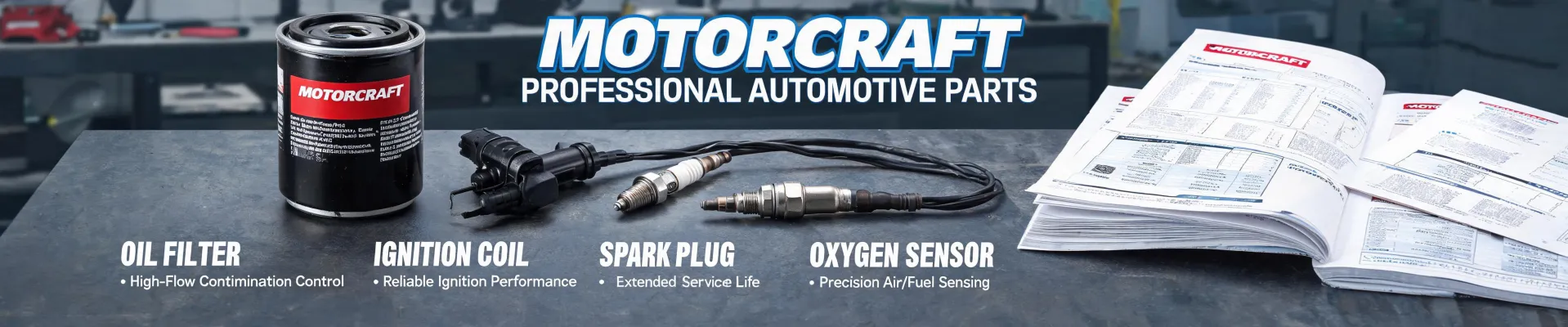
A practical, experience-driven look at why keeping a few emergency auto parts like Motorcraft oil filters and H11 bulbs on hand saves you from costly operational delays.
-
The 9 PM Phone Call That Changed Our Stocking Policy
-
What I've Learned About "Critical" vs. "Nice-to-Have" Stock
-
Why the Motorcraft FL-820-S Is a "Must-Stock" Part
-
The Catastrophic Theft Scenario: Catalytic Converters
-
When a "Muffler Shop" Is Your Backup Plan
-
One More Thing: The "Penny Wise, Pound Foolish" Pitfall
-
So, What Should You Stock?
-
When This Advice Doesn't Apply
There's a question that comes up in every purchasing meeting I've been part of for the last six years: "Do we really need to stock that part?" My answer, almost always, is yes. And it's not because I like filling up shelves. It's because I've seen what happens when you don't.
In my role coordinating emergency parts for a medium-sized fleet, I've handled over 200 rush orders in the last three years alone. About 40% of those were for parts that cost under $25 each. The rush shipping alone—not the part, just the shipping—averaged $47 per order. That's the math that tells the story. You're not saving money by avoiding the stock; you're just moving the cost from inventory to emergencies. And emergencies are always more expensive.
The 9 PM Phone Call That Changed Our Stocking Policy
In March 2024, a driver called at 9:17 PM. He was 300 miles from the shop, and his truck's headlight had just burned out. He needed an H11 bulb. Not a specialty part. Not something exotic. A standard H11 bulb that costs about $12-18 at any auto parts store.
Here's the problem: we didn't stock them. We had a "just-in-time" philosophy for lighting. The closest open store was 22 miles away, and they had exactly one bulb left. The driver got there at 10:30 PM. Problem solved? Not exactly. The bulb was a different brand than what was in the other side, and the driver noted the light pattern was off. He made it back, but the whole detour cost us 3 hours of driving time. That's roughly $180 in lost productivity, plus the $12 for the bulb. We saved maybe $40 by not having two bulbs on the shelf. Net loss: $140.
That's when I implemented our "10 Most Common Failure Parts" policy. We identified the top ten parts that fail most often based on our fleet data: oil filters (Motorcraft FL-820-S being the most common for our Fords), H11 bulbs, belts, a few specific fuses, and wiper blades. We now keep a minimum of two of each in stock. The total inventory cost? About $350. The savings in avoided downtime last year alone? Roughly $2,200.
What I've Learned About "Critical" vs. "Nice-to-Have" Stock
Not every part is worth stocking. I don't have hard data on industry-wide failure rates for every component, but based on our experience, the pattern is clear. Here's the breakdown I use:
Parts that are worth stocking: Oil filters for your most common engine platforms (like the Motorcraft FL-820-S for Ford 6.7L Power Stroke diesels or the equivalent for other makes). Headlight and taillight bulbs for your top three vehicle models. Wiper blades. Serpentine belts for your most common engine. A handful of critical fuses.
Parts that aren't worth stocking: Anything that's unique to a single vehicle you rarely service. Anything that costs more than $100 to stock and fails less than once a year. Anything that can be reliably sourced within 30 minutes from a local supplier during business hours.
The trick is knowing the difference. I made the mistake of stocking a $200 alternator for a vehicle we only had two of. That alternator sat on the shelf for two years before we finally returned it—at a 15% restocking fee. I saved $30 on the original purchase by buying in bulk, but I lost $30 on the restocking fee, plus two years of carrying cost. Not my smartest move.
Why the Motorcraft FL-820-S Is a "Must-Stock" Part
The Motorcraft FL-820-S oil filter is a great example of a part that should always be on the shelf—especially if you run Ford 6.7L Power Stroke diesels. It's the factory-specified filter for those engines. It costs about $8-12 retail. But if a 6.7L Ford truck needs an oil change and you don't have the filter, you're looking at a delay of at least a few hours while someone goes to get one. That's a delay that could cost you hundreds in lost revenue.
Is it worth saving $12 to avoid stocking it? No. Especially when you consider that many aftermarket filters don't meet the exact specifications for that engine. I've seen a few cases where a generic filter caused an oil pressure issue—not common, but enough to make me prefer the Motorcraft part. Using the right filter isn't just about quality; it's about avoiding the risk of a warranty claim or an engine problem down the road.
The Catastrophic Theft Scenario: Catalytic Converters
Now, catalytic converter theft is a different beast entirely. Does insurance cover it? The short answer is: yes, under comprehensive coverage. According to the National Insurance Crime Bureau (NICB), catalytic converter theft claims exceeded 14,000 in 2022, with an average claim cost of $2,089 per incident. Most standard auto insurance policies cover theft under comprehensive coverage, minus your deductible.
But here's where the "prevention over cure" mindset comes in. Yes, insurance covers the loss. But your deductible—typically $250 to $1,000—is real money. And then there's the downtime. A vehicle without a catalytic converter can't be driven legally in most states. The repair could take days if the part is backordered. I'd rather spend $50 on a catalytic converter shield or a cage than deal with that headache.
We started installing basic security cages on our box trucks last year. Cost: about $300 per vehicle, installed. Since then, we've had zero thefts on protected vehicles. The one unprotected truck we had? Stolen converter, $2,500 claim, 4 days of downtime. The cage paid for itself in one incident.
When a "Muffler Shop" Is Your Backup Plan
Sometimes, despite your best planning, you need a local shop. If you're in Santa Ana and a muffler or exhaust component fails, having a relationship with a local muffler shop is a legitimate backup plan. I've used a shop near Santa Ana twice in the past 18 months when a custom exhaust piece failed unexpectedly. The shop had the capability to weld a fix or fabricate a replacement in a few hours. Cost was fair—about $150-250 per repair—and it saved us from being down for days waiting on a shipment.
The lesson: local relationships matter. If you can find a good shop—whether it's for mufflers, electrical repairs, or bodywork—they are a valuable part of your emergency response plan. But they should be the backup, not the primary plan. Relying on a local shop for routine maintenance is risky; they might not have the capacity or the exact parts you need on a busy day.
One More Thing: The "Penny Wise, Pound Foolish" Pitfall
I mentioned the data on rush shipping costs earlier. Here's a specific example of how that plays out. I saved $80 by choosing standard shipping on a bulk order of Motorcraft FL-820-S filters instead of expedited. The standard delivery was supposed to arrive on a Tuesday. It arrived on a Thursday, three days late. We had two trucks waiting for oil changes that week. Instead of a 30-minute job, each change took 2 hours because we had to send someone to a local store to buy a filter. Total cost of "saving" $80: $240 in lost labor.
The cheap option looked smart until the problem hit. Net loss: $160. Since then, I've adjusted our ordering schedule to include a 3-day buffer on all critical consumables. It's not always possible, but when it is, it's saved us more than it's cost us.
So, What Should You Stock?
Look, I'm not saying you need to turn your shop into a warehouse. But here's a practical starting point based on what I've learned:
For a fleet of 5-10 vehicles:
- 2-3 oil filters per engine type (e.g., Motorcraft FL-820-S for Ford 6.7L diesels)
- 2-3 H11 or H7 bulbs (whichever your most common vehicles use)
- 2-3 serpentine belts for your most common engine
- 1-2 catalytic converter security cages (if you're in a high-theft area)
Total estimated cost: $300-500. Potential savings from avoided downtime: $1,500-3,000 per year. The math is pretty clear.
When This Advice Doesn't Apply
I'll be honest: this approach isn't for everyone. If you run a tiny shop with one or two vehicles and you're 10 minutes from an auto parts store, you might not need to stock much. If your vehicles are all under warranty and you have a dealer service contract that includes parts, stock accordingly. And if you're dealing with parts that cost hundreds of dollars and fail once every few years, it's probably not worth the shelf space.
But for the most common failures—the $12 filter, the $15 bulb, the $30 belt—the cost of not having them is almost always higher than the cost of stocking them. Five minutes of preparation beats five days of correction.
About the author

Elise Novak is an automotive braking systems analyst specializing in brake pads, discs, rotors, calipers, shoes, drums, hoses, and complete brake kits. She uses UN Regulation 90 requirements and ISO 26867 dynamometer methods to examine friction stability, fade and recovery, wear, disc thickness variation, runout, and hydraulic integrity. Her work helps distributors, quality teams, and fleet buyers compare replacement parts, verify application suitability, and define incoming-inspection criteria.