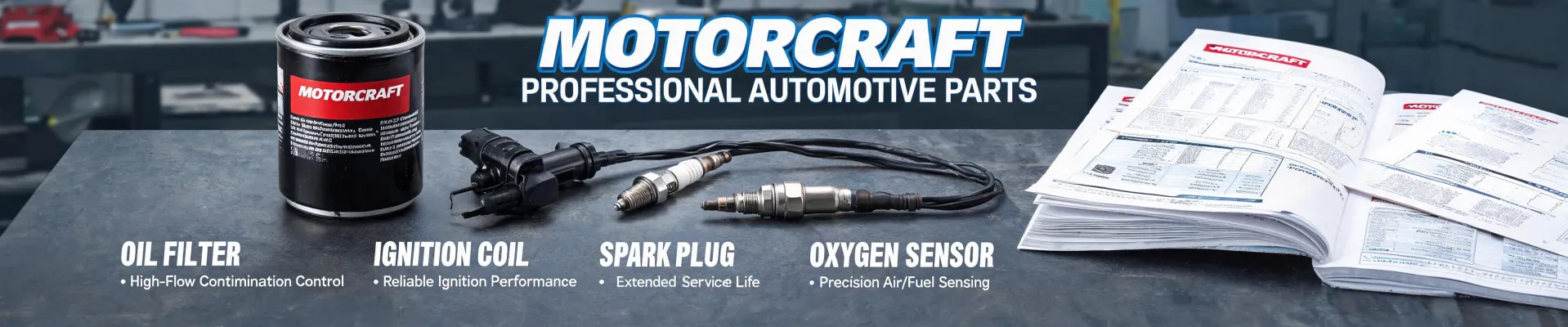
A pitfall documenter shares how a mixed fleet order for a 2011 Ford F250 6.2 oil filter Motorcraft, Motorcraft FA-1611 air filter, Toyota Tacoma alternator replacement, HVAC piston metering device, and cabin air filter decision went wrong—and the checklist that fixed it.
In February 2022, I was standing in our shop at 6:40 a.m. with three service tickets on the board. A 2011 Ford F-250 6.2 gas truck needed an oil change and an air filter. A Toyota Tacoma needed an alternator. And a rooftop HVAC unit was down with a suspected metering issue. I had been handling parts and service orders for 9 years. I had personally made and documented 23 significant mistakes, totaling roughly $18,000 in wasted budget. I thought I knew better. That morning proved I didn't.
The first mistake: trusting the search bar
I typed 2011 ford f250 6.2 oil filter motorcraft into our supplier portal. The first result looked right. I added a Motorcraft FA-1611 air filter. I didn't check the VIN. I didn't check whether the listing covered the 6.2 gas or the 6.7 diesel. I just clicked order. The air filter was fine. The oil filter wasn't. The tech found out when he tried to spin it on. We lost half a day and paid a restocking fee.
That's the part that still bothers me. It wasn't a complex failure. It was a search bar failure. I treated a keyword like a specification. A part number is a specification. A year, make, model, and engine description is a starting point.
Ford's 2011 F-250 owner manual lists the 6.2L gas engine oil filter as Motorcraft FL-820S. The 6.7L diesel uses a different filter. Always verify by VIN—not by year and model alone.
The second mistake: the Toyota Tacoma alternator replacement
Later that same week, I ordered a Toyota Tacoma alternator replacement by year, make, and model. I thought that was enough. It wasn't. The truck had a tow package and a different alternator connector than the base listing. The first unit didn't plug in. We sent it back, paid return shipping, and waited another day. The customer was patient, but I wasn't proud of it.
If you're doing a Toyota Tacoma alternator replacement, don't stop at '2015 Tacoma V6.' Check the plug shape, the amperage, and the options. Look at the old alternator. Take a photo. Compare the mounting ears and connector before you order. That one photo would have saved us a day.
The third mistake: the $12 HVAC piston metering device
The third mistake was the expensive one. We had an HVAC piston metering device to replace. I matched the part by outdoor unit brand. I didn't verify the refrigerant or the tonnage. I installed the wrong piston. The system pumped down, froze the coil, and tripped on low pressure. We had to recover the charge, replace the piston again, and recharge. We wasted maybe $1,400—no, closer to $1,600 once you count the second service call.
The surprise wasn't the alternator. It was the $12 piston. A tiny brass part caused the biggest failure of the week. In HVAC, the piston metering device is matched to the outdoor unit's tonnage and refrigerant type. If you guess, you don't get a warning. You get a frozen coil and a callback.
The question that changed my mind: do you need a cabin air filter
While all this was going on, a customer asked me: do you need a cabin air filter? I used to answer that with a shrug. I'd say it's optional. Then we pulled a cabin filter out of that Tacoma. It was full of leaves, dust, and what I hope was pet hair. The evaporator behind it wasn't much better. That's when I changed my answer.
Do you need a cabin air filter? If your vehicle came with one from the factory, yes—replace it on the interval in your owner's manual. If it didn't come with one, you don't need to add one, though some aftermarket kits exist. The filter protects your HVAC system and your lungs. It's not a performance part. It's maintenance.
The checklist that came out of it
After that week, I created a one-page pre-check list for our team. It's not fancy. It's the thing I wish I'd had in 2017 when I made my first expensive parts mistake.
- Start with the VIN. Not the year. Not the model. The VIN.
- Confirm the engine, options, and package. A tow package can change the alternator. A 6.2 gas is not a 6.7 diesel.
- For filters, verify the Motorcraft part number against the VIN or owner manual. A Motorcraft FA-1611 air filter is not a universal fit.
- For Toyota Tacoma alternator replacement, check the connector, amperage, and mounting before ordering.
- For an HVAC piston metering device, match refrigerant and tonnage. Photograph the old piston and the data plate.
- For cabin air filters, check whether the vehicle has one. If it does, recommend replacement. If it doesn't, explain that it's optional.
- Have a second person read the part number back to you before you click buy.
We've caught 47 potential errors using this checklist in the past 18 months. Some were small. Some would have been $500 or more. The checklist doesn't make us perfect. It just stops us from repeating the same mistakes. That's all I want from a process.
My experience is based on about 180 mixed-fleet orders. If you're working with heavy-duty diesel or commercial HVAC, your experience might differ. The principle still holds: verify the part, not the label.
What I tell customers now
I'd rather spend 10 minutes explaining part numbers than deal with mismatched expectations later. An informed customer asks better questions and makes faster decisions. That's why I tell people to ask for the part number, not just the price. Ask what the part does. Ask what happens if it's wrong. Ask whether the job needs a gasket, a connector, or a new filter while you're in there.
Motorcraft parts are built to Ford's service specifications, and that matters for a 2011 Ford F250 6.2 oil filter Motorcraft application. But even the right brand can be the wrong part if you don't match the engine. The same goes for a Motorcraft FA-1611 air filter. The same goes for any Toyota Tacoma alternator replacement. The same goes for an HVAC piston metering device. The same goes for the simple question: do you need a cabin air filter.
Now when someone asks me do you need a cabin air filter, I don't just say yes or no. I ask what they drive. I ask what the manual says. I ask when it was last changed. That's the job. Not just selling a part—helping someone understand why it fits.
If you take one thing from my $1,600 mistake, take this: the search bar is not a checklist. The VIN, the old part, and the data plate are the checklist. Use them before you order. Your future self will thank you.
About the author

Elise Novak is an automotive braking systems analyst specializing in brake pads, discs, rotors, calipers, shoes, drums, hoses, and complete brake kits. She uses UN Regulation 90 requirements and ISO 26867 dynamometer methods to examine friction stability, fade and recovery, wear, disc thickness variation, runout, and hydraulic integrity. Her work helps distributors, quality teams, and fleet buyers compare replacement parts, verify application suitability, and define incoming-inspection criteria.