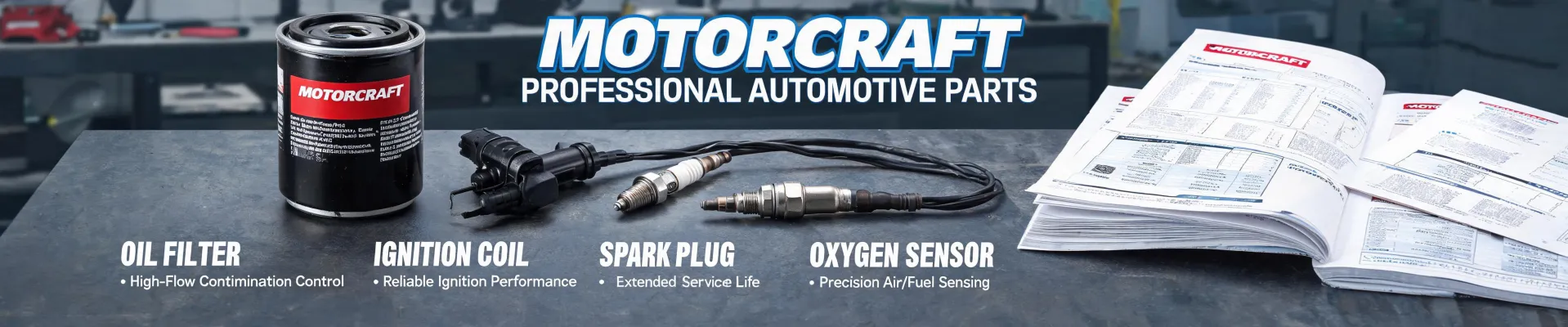
A quality compliance manager at an automotive parts distribution center recounts the rejected "OE-equivalent" filter shipment, a 0.2mm O-ring defect on the 2021 Ford Explorer 2.3 oil filter application, a near-misdiagnosis involving a 6.7 Powerstroke fuel filter and a DPF differential pressure sensor, and the verification lessons that followed.
The pallet arrived on a Tuesday in late March 2024. Eighty boxes of oil filters, shrink-wrapped in two even stacks, barcode labels facing outward like they'd been arranged for an inspection photo. The forklift driver set it down in Receiving Bay 3 and waved the bill of lading at me. Morning routine: cardboard, packing tape, the faint diesel smell from the yard trucks. I ran a gloved hand over the shrink wrap—tight, no tears—and checked the batch numbers against the certificate. Sequential. Matched the PO. It looked like any of the hundred deliveries we process each month.
I'm the quality compliance manager at an automotive parts distribution center. I review every delivery before it moves into racking—roughly 200 unique SKUs in 2024, covering filters, sensors, pumps, and brake parts. Over the past three years, I've rejected about 9% of first deliveries. Usually for small things: label mismatches, damaged cartons, a batch code that didn't line up with the paperwork. Rarely for something that could actually put a vehicle at risk. That Tuesday felt routine. It wasn't.
The 2021 Ford Explorer 2.3 and a 0.2mm Problem
The new supplier had pitched us at the start of the year. Their filters were "OE-equivalent" to Motorcraft at 40% less per unit. For our account manager, the math was simple: 2,000 filters a year, roughly $10 difference per filter, close to $20,000 in annual savings. I don't blame the finance side for pushing. I blame the O-ring.
I pulled five samples from the Explorer lot and ran them against our dimensional spec sheet. The thread pitch matched the Motorcraft part number in our catalog for the 2021 Ford Explorer 2.3 oil filter application. Body diameter was within tolerance. Bypass valve opening pressure felt right. Then I measured the sealing O-ring: 0.2mm smaller in cross-section than the OEM specification. About two sheets of copy paper. Small enough to pass a casual inspection, big enough to weep hot oil under vibration.
I don't have hard data on how many "OE-equivalent" filters fail a cross-section check like that. Nobody publishes those numbers. But based on five years of reviewing deliveries, my sense is that 8–12% of mid-tier aftermarket filters drift somewhere on a secondary sealing feature. The main dimensions are right. The parts that keep pressure inside when things get hot—that's where the corners get cut.
I flagged the lot and asked for a torque test before release. That's where the story gets uncomfortable.
The Install That Ran the Red Light
My request didn't reach the service bay in time. An order had been pulled the night before—a customer with a 2021 Explorer 2.3 waiting for an oil change. The tech checked the part number against the bay computer and installed it. The car left the lift about forty minutes after I sent the email.
It leaked. Not much—just enough to leave a drip on the customer's garage floor by the next morning. The customer called. Then the service manager called me. I got to look at a phone photo of the filter base, wet with fresh oil, and explain why the O-ring measurement I'd flagged at 7:40 a.m. mattered by 3:10 p.m.
"It's just a seal," the service manager said when I asked why the hold notice hadn't been followed. Two hours later, we were both looking at the same photo.
I had maybe twenty minutes to decide what to do with the rest of the lot—all 80 boxes, not just the Explorer SKU. Normally, I'd pull samples from every batch and run a full dimensional report before rejecting or releasing. There wasn't time. I made the call from the photo alone. In hindsight, the photo was all the evidence I needed.
That's the kind of decision that sounds decisive in a meeting. Honestly, it was just a math problem. A 0.2mm deviation on a part that holds 40 PSI of hot oil is not a negotiation. The labor costs alone—rework, a customer's missed morning, a service bay's lost hour—outweighed whatever the discount had saved.
We rejected the delivery. The vendor pushed back. To be fair, their paperwork was more professional than most of what we see. Documentation, however, does not compress an O-ring.
The 6.7 Powerstroke That Almost Fooled Me
The same vendor also supplied fuel filters—specifically, the Motorcraft FD-4617 fuel filter kit for the 6.7 Powerstroke diesel, the one our catalog lists for most 2011–2022 F-Series Super Duty trucks. I'd set those aside for bench inspection when the oil filter issue broke. Before I got to them, a phone call changed the story.
The fleet manager on the line wasn't interested in my batch rejection story. One of his 6.7 Powerstroke trucks had thrown a check-engine light with a P2452 code—the diagnostic for the differential pressure sensor on the DPF circuit. He connected the dots the way most people would: rejected filters, DPF trouble, same week. The implication hung in the air. I didn't argue fast enough.
Here's the part I almost got wrong.
We ran a full diagnostic. First thing we checked was the DPF differential pressure sensor, since that's what the code names. I expected a sensor choked with soot, or a DPF loaded up from failed regenerations. What we found instead was a chafed wiring harness about four inches from the sensor connector. The plastic loom had rubbed against a transmission bracket until the wires inside were bare. Intermittent ground. We back-probed the signal wire; the voltage flickered when it should've been steady. That pointed at the harness, not the sensor element. The sensor was fine. The DPF was fine. The fuel filters we'd sold them were fine. The whole problem was fifteen cents of abrasion protection, and it had nothing to do with the vendor or that Tuesday's rejected shipment.
The fleet manager still wanted to replace the fuel pump for insurance—he'd already ordered one, convinced the filter issue had starved the fuel system. There wasn't any starvation. Fuel pressure held within spec across the entire RPM range. We showed him the data. He cancelled the pump order.
I wish I had tracked that diagnostic session more carefully—which checks we ran, in what order, how long each took. What I can say anecdotally is the turnaround took eleven hours, and the last two were my own stubbornness, re-checking filters I'd already decided were suspect. I had let a legitimate rejection color my judgment about an unrelated system. That's a humbling thing to admit.
The Cabin Air Filter Question Nobody Thinks to Ask
While the filter mess was unfolding, our service desk was fielding the usual calls. The most common question customers ask us is when to change cabin air filter in car—not oil filters, not fuel filters, not DPF sensors. Cabin air filters are the ones people actually forget.
Most Ford maintenance schedules put the cabin air filter between 15,000 and 20,000 miles, or 12 months in severe-service conditions—dust, heavy traffic, extreme weather. Check your specific model's interval. What owners don't always realize is that local conditions matter more than the sticker number. If you park under trees, drive gravel roads, or notice a musty smell when the blower comes on, change it early. The part typically runs $15–30 (based on Motorcraft's published pricing and online retail quotes, March 2025; verify current rates), and the labor on an Explorer is usually about ten minutes—unless the filter hides under the dashboard, in which case ten minutes becomes an afternoon.
The cabin filter lesson is the same as the oil filter lesson, just with lower stakes. A cheap filter that ignores the media spec will still flow air. It just won't filter it. Same principle, different part.
Aftermath and What I'd Do Differently
The vendor rebuilt the entire order at their cost—all 80 boxes, delivered the third week of April. We revised the contract to include third-party dimensional verification every batch for the first year, plus the right to inspect their production line with 14 days' notice. They signed it. I don't think they're a bad company. But I do not mean to suggest their process was acceptable either. Somewhere in their supply chain, an O-ring material spec changed and nobody caught it.
That week pushed us to change our own process:
- Cross-section verification on every sealing component for the first three batches of any new vendor, then random audits afterward.
- Photo documentation of every rejected dimension, sent to the vendor with a request for corrective action—not just a written response.
- A working rule for diagnostics: verify the part before you replace it. That rule covers sensors, filters, and my own assumptions.
What was best practice when I started this job in 2021 doesn't fully apply in 2025. The aftermarket has genuinely improved—better lookup data, better coatings, more accurate labeling. But the fundamentals haven't changed. A filter is a filtering device, and its job is to keep contamination out of the engine. The seal, the media, the bypass valve—these details decide whether a part is a value or a liability. The industry will keep finding cheaper ways to make parts look indistinguishable. The next quality manager will keep finding 0.2mm problems.
That Tuesday taught me something I repeat in every team meeting: the difference between a cheap part and an equivalent part is usually a dimension you didn't measure until it mattered.
This is based on my own experience across roughly 200 SKUs per year with domestic fleets and retail service. If you're sourcing for European or Asian vehicles, your mileage may vary—literally.
About the author

Elise Novak is an automotive braking systems analyst specializing in brake pads, discs, rotors, calipers, shoes, drums, hoses, and complete brake kits. She uses UN Regulation 90 requirements and ISO 26867 dynamometer methods to examine friction stability, fade and recovery, wear, disc thickness variation, runout, and hydraulic integrity. Her work helps distributors, quality teams, and fleet buyers compare replacement parts, verify application suitability, and define incoming-inspection criteria.