An administrative buyer’s practical guide to sourcing automotive components like filters, camshafts, and CV joint boots—without hidden costs or operational hiccups.
-
Who This Checklist Is For
-
Step 1: Lock Down the Specs Before You Browse
-
Step 2: Ask for the “Total” Cost, Not Just the Unit Price
-
Step 3: Include Maintenance Consumables in Every RFQ
-
Step 4: Check the Vendor’s Invoicing and Compliance History
-
Step 5: Build in a 10% Buffer for Unanticipated Needs
-
Common Mistakes to Avoid
Who This Checklist Is For
If you're the person responsible for ordering replacement parts for a fleet, a maintenance shop, or a mid-sized manufacturing plant… this one’s for you. I manage purchasing for a 200-person facility—roughly $150,000 annually across about 8 vendors covering everything from oil filters to CNC tooling.
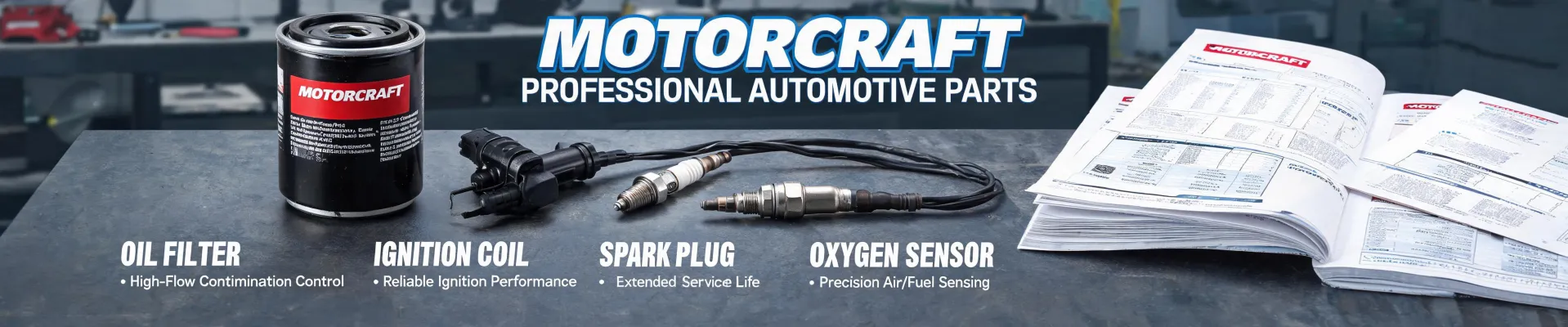
When I took over the role in 2020, I made every mistake you can imagine: ordering based on price alone, ignoring total landed cost, and finding out the hard way that inventory management is a thing. After consolidating vendors in 2024, I’ve landed on a 5-step checklist that works for any category—whether it's Motorcraft FL-2124-S oil filters or FD-4615 fuel filters, camshaft replacement costs, or even evaluating whether a supercharger actually needs an intercooler.
Here’s the checklist I now follow for every purchase over $500.
Step 1: Lock Down the Specs Before You Browse
This sounds obvious, but it’s where most misorders start. You see a good price on a CV joint boot and click “add to cart” before verifying fitment. Don't.
I learned this after ordering 30 camshaft kits at a great price—only to realize the grind profile didn't match our engine series. The return was a nightmare because we had damaged the packaging. Now I always pull up the OEM reference first. For Motorcraft filters, that means checking the FL-2124-S spec sheet for thread size, bypass valve pressure, and anti-drainback valve compatibility.
Checklist:
- Confirm part number, revision level, and supersession history
- Match manufacturer reference (e.g., Motorcraft FD-4615 replaces FD-4610 in some diesel applications)
- If you're sourcing a single component, don't rely on a single online listing—cross-reference the original supplier
Step 2: Ask for the “Total” Cost, Not Just the Unit Price
I’m a big believer in what I call transparent pricing. The vendor who lists all fees upfront—even if the total looks higher—usually costs less in the end. The one who gives you a cheap unit price and adds handling, special packaging, or rush surcharges later? Not worth the headache.
In 2023, I compared two quotes for replacing camshafts across 15 vehicles. Vendor A: $180 each, no mention of core charges. Vendor B: $210 each, clearly stated $45 core deposit (refundable). Guess which one ended up cheaper? Vendor A’s cores were non-refundable, so the real cost was $225 each. Vendor B was transparent, so I could plan the budget perfectly.
I don't have hard data on how often this happens industry-wide, but based on my 5+ years of orders, my sense is about 30% of low-ball quotes have hidden fees.
Step 3: Include Maintenance Consumables in Every RFQ
This is the step most people forget. You're comparing big-ticket items like an aluminum extrusion or a CNC-machined component—but you don't think about the CV joint boots, seals, or gaskets you'll also need to install. Including them in the same RFQ often gets you volume discounts and easier logistics.
When I consolidated orders in 2024, I bundled every replacement filter (Motorcraft FL-2124-S, FD-4615, etc.) with the camshaft kits and supercharger components. The supplier loved it. Single shipment, simpler paperwork, and an automatic 5% discount on the total.
Pro tip: If you're sourcing a supercharger, ask the vendor outright: “Does this model need an intercooler for our application?” The answer is usually yes for sustained high-boost use, but some centrifugal units for lower-pressure setups can run without one. I've seen buyers get burned by not asking this simple question.
Step 4: Check the Vendor’s Invoicing and Compliance History
This is a step I added after a painful lesson. In 2022, I found a great price on a batch of fuel filters from a new vendor—$3 less per unit than Motorcraft FD-4615. Ordered 100 units. They arrived fine, but the invoice was a handwritten receipt. Finance rejected the expense. I ended up eating $300 out of my department budget. Now I verify invoicing capability before placing any order.
Per FTC guidelines (ftc.gov), advertising and billing claims must be truthful and substantiated. A vendor that can’t provide a clear, itemized invoice likely isn’t keeping accurate records—which is a red flag for product traceability and warranty support.
Step 5: Build in a 10% Buffer for Unanticipated Needs
No matter how thorough your checklist is, something will surprise you. A camshaft bearing seizes during installation. A CV joint boot tears when fitting. A supercharger kit needs an extra bracket or longer bolts. I always set aside 10% of the total project budget for these “gotchas.”
I wish I had tracked the exact number of times this buffer saved me from a production stop. What I can say anecdotally is that in my five years, it’s come in handy roughly 4 out of 5 times. It’s not a failure of planning—it’s the reality of mechanical work.
Common Mistakes to Avoid
Mistake 1: Assuming OEM vs. aftermarket quality is irrelevant for consumables. It isn’t. Motorcraft filters, for example, meet specific flow and filtration specs that cheaper alternatives may not match.
Mistake 2: Ignoring the total landed cost (TLC). Shipping, handling, duties, and potential restocking fees often add 15–25% to the base price. I always ask the vendor to provide a TLC quote in writing.
Mistake 3: Not verifying return policies. Some vendors charge 25% restocking fees even for unopened boxes. Others won’t accept returns at all after 30 days.
Mistake 4: Overlooking USPS regulations if you ship or receive samples. Under federal law (18 U.S. Code § 1708), only USPS-authorized mail may be placed in residential mailboxes. I've had suppliers send prototypes via couriers that got left on loading docks—creating confusion and delays. Know your shipping rules before you assume a vendor’s default method works for you.
Final reminder: Prices change. As of March 2025, Motorcraft FL-2124-S typically runs $12–18 depending on quantity; FD-4615 is around $18–25. But verify current rates—this is just a reference from my last order cycle.
About the author

Elise Novak is an automotive braking systems analyst specializing in brake pads, discs, rotors, calipers, shoes, drums, hoses, and complete brake kits. She uses UN Regulation 90 requirements and ISO 26867 dynamometer methods to examine friction stability, fade and recovery, wear, disc thickness variation, runout, and hydraulic integrity. Her work helps distributors, quality teams, and fleet buyers compare replacement parts, verify application suitability, and define incoming-inspection criteria.