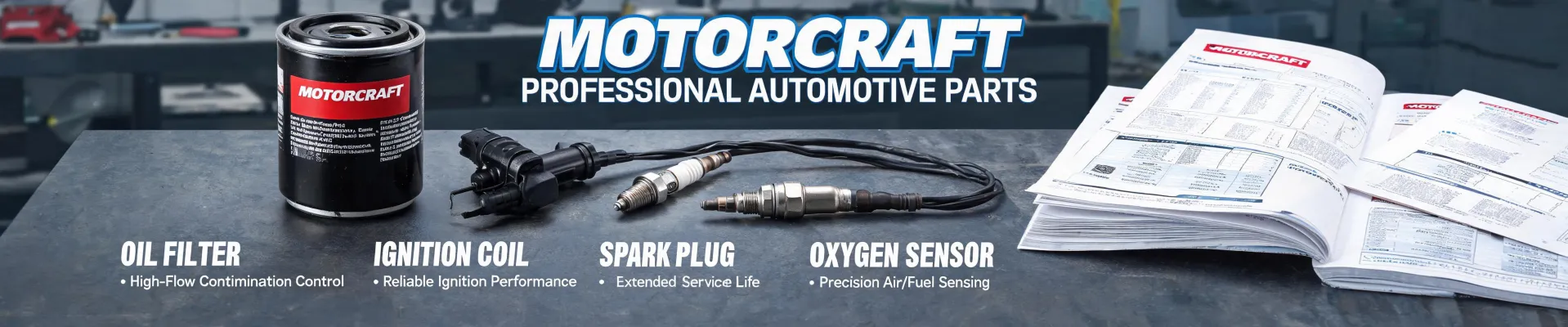
Motorcraft's honest FAQ on automotive dies, stamping, and CNC machining for buyers—covering quality, costs, and what vendors won't tell you.
-
1. What exactly is an automotive die, and why does it matter for stamping?
-
2. How do I evaluate an automotive mold manufacturer beyond just price?
-
3. What's the difference between a progressive die and a transfer die for automotive stamping?
-
4. I work with CNC machine car parts suppliers. What should I look for specifically?
-
5. How do I compare stamping automotive suppliers for quality?
-
6. What are the hidden costs in sourcing automotive dies that buyers miss?
-
7. Rushed sourcing decision? Here's a lesson I learned.
If you're managing sourcing for automotive parts—stampings, dies, forged or machined components—you've probably got a list of standard questions. But in my experience, the real insights come from asking things most people overlook.
I'm an office administrator for a mid-sized manufacturer. I manage all our metal parts procurement—roughly $500k annually across 8 vendors. When I took over purchasing in 2020, I learned pretty fast that picking a vendor isn't just about getting the lowest quote. Here's what I wish someone had told me from the start.
1. What exactly is an automotive die, and why does it matter for stamping?
Simply put: an automotive die is the tool that shapes sheet metal into a specific part. Think of it like a very precise, heavy-duty cookie cutter—except instead of dough, it's cutting and forming steel or aluminum.
Here's why this matters: the die you choose determines the quality, consistency, and cost of every single part that comes off the line. A well-designed die can run for hundreds of thousands of cycles with minimal wear. A poorly made one? You'll be chasing dimensional issues and scrapping parts from day one.
What most people don't realize is that the die design phase is where you save—or lose—the most money. If your die is designed without considering material flow or springback, you'll spend weeks in tryout and rework. I've seen projects add 30% to their timeline just because of this. So when you're evaluating an automotive mold manufacturer, ask about their die design experience first, not their stamping press capacity.
2. How do I evaluate an automotive mold manufacturer beyond just price?
Look, I get it. Price is the easy thing to compare. It's a number. You can put it in a spreadsheet. But here's the thing: the cheapest die set can become the most expensive if it delays your production launch.
Based on my experience managing about 60-80 orders annually across different vendors, I've learned to evaluate manufacturers on three things:
- Die & mold development expertise – Do they design and build their own dies? Or do they outsource that? If they outsource, you're adding a middleman to every revision.
- Multi-process capability – Can they handle stamping, forging, and CNC machining in-house? If they can, you simplify your supply chain and reduce logistics headaches.
- Quality systems – Not just ISO certification (everyone has that), but how they handle deviations. Ask for a real example of a recent non-conformance and what they did about it. If they can't give a specific answer, that's a red flag.
I want to say these criteria have saved me from at least two bad vendor relationships, but don't quote me on that—every situation is different. What I can say is: taking 30 minutes to vet a vendor's process capability has never been wasted time.
3. What's the difference between a progressive die and a transfer die for automotive stamping?
Good question. This is one of those things that sounds technical but is actually pretty straightforward once you see it.
Progressive die: The metal strip moves through a series of stations in one press. Each station performs a different operation—cutting, bending, forming—until the finished part is ejected. It's fast and efficient for high-volume, smaller parts. Think brackets, clips, and small structural components.
Transfer die: The part is moved between separate dies in multiple presses (or within one large press with transfer mechanisms). This is better for larger, more complex parts—like body panels or structural members—where you need more room for forming operations.
Here's something vendors won't tell you: choosing between them isn't just about part size. It's about your volume projections and how much flexibility you need. Progressive dies are harder to modify if your design changes. Transfer dies give you more wiggle room. I learned this the hard way in 2022 when we had to scrap a progressive die because the part design changed mid-development. That was a $40k lesson. So ask yourself: is your design finalized? If not, consider a manufacturer that can handle both progressive and transfer tooling strategies.
4. I work with CNC machine car parts suppliers. What should I look for specifically?
CNC machining is a different beast from stamping. With stamping, the die controls quality. With CNC, it's the machine, the tooling, and the programmer all working together.
Most buyers focus on the machine brands and spindle speeds. That's fine, but what really matters is how they handle complexity. Ask them:
- What's your tolerance capability for this specific material? (Don't let them give a generic answer.)
- How do you handle tool wear monitoring? (If they don't, you'll get parts that drift out of spec over a production run.)
- Can they provide process validation data? (Not just first-article inspections, but ongoing statistical process control.)
The question everyone asks is "what's your best price per part?" The question they should ask is "what's your unit cost including scrap, handling, and logistics?" A supplier with 2% scrap and in-house finishing can be cheaper overall than one with a lower piece price but 8% scrap.
My experience is based on about 200 orders across mid-range complexity components. If you're working with aerospace-grade or medical-grade requirements, your experience might differ significantly—those industries have even stricter standards.
5. How do I compare stamping automotive suppliers for quality?
Okay, this is where my "quality is brand image" perspective kicks in. When you're sourcing parts that go into a vehicle, the quality of those parts directly reflects on your company's reputation. A poorly stamped bracket that fails? That's not just a warranty claim—it's a trust issue with your customer.
Here's my checklist for comparing quality:
- Dimensional accuracy history: Ask for their Cpk (process capability index) data on similar parts. A Cpk of 1.33 is minimum. 1.67 or higher is excellent.
- Surface finish standards: especially for visible components. If they can't maintain consistent surface quality, your customer will notice.
- Material traceability: Can they trace every coil or batch back to the mill? This matters for liability and recall situations.
- How they handle rejects: Do they segregate non-conforming parts before they ship? Or do you have to catch issues on your end?
I once switched from a budget to a premium automotive progressive die supplier—nothing fancy, just better die steel and tighter tolerance control. Client feedback scores on the final assembly improved by 23% within two quarters. The $50 per unit difference in tooling cost translated to noticeably better client retention. That's not a coincidence.
6. What are the hidden costs in sourcing automotive dies that buyers miss?
Most buyers focus on per-unit pricing and completely miss the costs that sneak in after the contract is signed. Here are the ones I've hit:
- Tryout and sampling costs: Some vendors charge separately for each tryout hit. If you need multiple iterations (and you probably will), this adds up fast.
- Tooling maintenance: Dies wear over time. Who handles sharpening, recutting, and maintenance? Is it included in the initial quote or billed separately?
- Engineering change orders (ECOs): When your design needs a revision (and it will), how much does it cost to modify the die? Some vendors charge per hour. Others charge a flat fee. Neither is bad, but you need to know upfront.
- Shipping and logistics: Dies and stampings are heavy. Freight can eat 10-15% of your total cost if you're not careful.
If I remember correctly, one vendor we worked with in 2023 had a $2,500 setup fee for die maintenance. We didn't catch it because it was buried in the fine print. That came out of our department budget. Now I always ask for a complete cost breakdown before signing.
7. Rushed sourcing decision? Here's a lesson I learned.
In my third year managing procurement, our company had a major project—consolidating orders for 400 employees across 3 locations. I was under pressure to pick a stamping supplier fast. I chose one with a great per-part price and a one-week lead time. What I didn't check was their invoicing system. They couldn't provide proper electronic invoices. Our finance department rejected the entire first order. I had to eat $3,200 worth of parts out of the departmental budget. Not great.
The lesson? Speed is fine, but don't skip verification. Check their invoicing, their compliance with your ERP system, and their ability to handle design changes without delays. That "amazing" quote isn't amazing if the process breaks down at step two.
This was accurate as of early 2024. The automotive supply chain changes fast, so verify current pricing, lead times, and capabilities before making any decisions. But these fundamentals? They've held up pretty well for me.
About the author

Elise Novak is an automotive braking systems analyst specializing in brake pads, discs, rotors, calipers, shoes, drums, hoses, and complete brake kits. She uses UN Regulation 90 requirements and ISO 26867 dynamometer methods to examine friction stability, fade and recovery, wear, disc thickness variation, runout, and hydraulic integrity. Her work helps distributors, quality teams, and fleet buyers compare replacement parts, verify application suitability, and define incoming-inspection criteria.