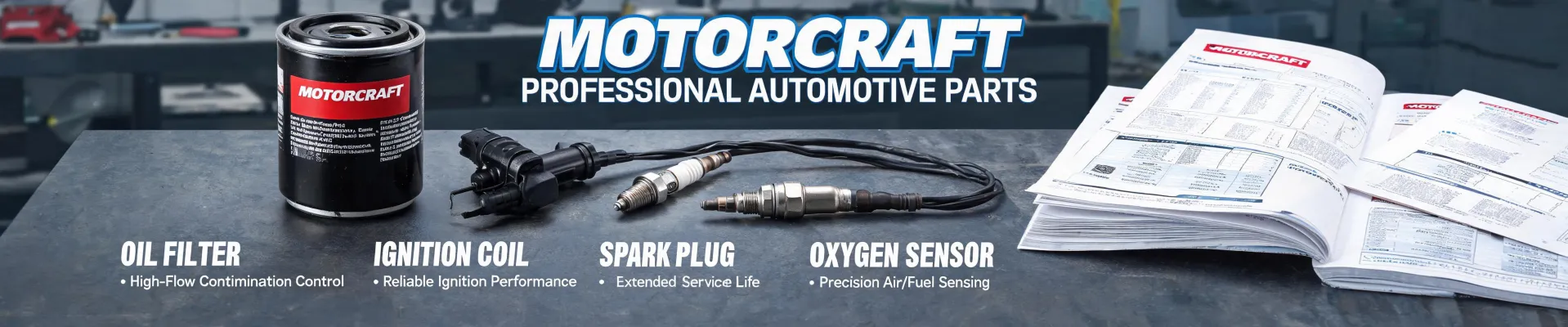
An administrative buyer from a fleet maintenance operation shares why transparent pricing beats low-ball quotes in automotive parts procurement—from Motorcraft brake shoes to water pumps and clutch kits.
The most expensive mistake in parts buying isn't choosing the wrong brand. It's trusting a quote that doesn't tell you what's missing.
I'm the office administrator who handles procurement for a 60-person fleet maintenance operation. I've been in this seat since 2021, managing roughly $180,000 a year in parts orders—maybe $160,000 in a lean year, I'd have to check the ledger—across about 8 vendors. I report to both operations and finance, so I hear it when a part fails and when a payment doesn't add up. After 4 years of this, my opinion is pretty firm: suppliers who put everything on the table upfront—specs, tolerances, what's included, what isn't—cost less in the long run. Even when their sticker price is higher.
The Brake Shoe That Broke My "Best Price" Habit
Early in 2024, I found a vendor offering brake shoe assemblies at roughly 30% below our regular supplier. Same part number, same listing photos, looked like the same product. I ordered enough to cover three service bays for the quarter.
Turns out those shoes didn't include the hardware kit. The springs, pins, and adjusters needed to actually install them weren't in the box. Our head mechanic called me mid-job asking where the rest of the parts were. That $240 in missing hardware became a $320 problem after expedited shipping.
The regular supplier, whose quote had looked 30% higher, was actually the exact same price once the hardware was counted in. The difference: their quote said "complete kit—includes hardware." They carried Motorcraft brake shoes for the job, and the total cost difference was zero once you counted everything. That's what I mean by transparency.
Now I ask "What's NOT included?" before I ask the price. Every single time.
The "Direct Equivalent" Oil Filter That Wasn't
The aftermarket is full of parts that fit. It's also full of parts that almost fit.
Last year we needed a 2017 Ford Explorer 3.5 oil filter. The Motorcraft version is the OEM part—the one that came off the assembly line. A supplier pointed me to a "compatible" filter that was $4 cheaper per unit.
The threads matched. The canister dimensions matched. But the bypass valve calibration didn't. Our oil pressure readings looked wrong after the oil change, and it took two hours of diagnostic time to find out the filter was the problem, not the engine.
I'm not saying aftermarket parts are bad. Some are genuinely excellent, and I buy them regularly. But a quote with "compatible" on it is not the same as a quote with verified specifications. The difference doesn't show up until it costs you.
This was accurate as of 2023, and I'm sure some things have evolved since then—filter designs change, suppliers update their specs. The principle hasn't: paper specs and real-world performance aren't always the same thing.
A Water Pump, 3mm, and a $220 Lesson
We ordered a Dayton water pump for one of our shop trucks last year. The listing said "direct replacement." What it didn't say was that the pump body was 3mm deeper than the original. The fan clutch wouldn't seat properly, which meant we couldn't just bolt it on and go.
The $60 we saved buying the budget pump turned into a $220 problem: shipping both ways, restocking fees, and the mechanic's time we burned. The vendor's return policy was fine—they processed it quickly. But the hidden fitment detail cost us three days of downtime that no refund can replace.
Honestly, I'm not sure why listings miss details like that. My best guess: spec sheets get copied from similar models without full verification. From the buyer's side, it's exactly why I now check dimensions on a technical drawing before ordering anything that isn't a direct OEM replacement.
Why I Trusted a Cheap Clutch Kit (and Regretted It)
In 2024, I found a CRF 110 clutch kit online for $45. Our usual supplier charged $70. The numbers said the cheap kit was fine: same OEM part number, similar photos, decent reviews. My gut said something was off.
I ordered the cheap one anyway. The spreadsheet didn't lie, right?
Turns out the clutch plates were about 0.3mm thinner than OEM spec. Not enough to fail immediately, but enough that the engagement felt wrong. We replaced it with the $70 kit a week later. The $25 savings cost us about $90 in labor and lost time.
Every one of these examples follows the same pattern: the information you don't have is what costs you money. A transparent supplier doesn't just print a price—they list tolerances, included parts, exact applications, and exceptions. That transparency is worth real money.
How Much Brake Pad Should Be Left? Same Principle.
There's a question I see constantly in fleet maintenance forums: how much brake pad should be left? People answer "3mm" because that's the hard minimum. But most OEM service programs actually recommend replacement at 4mm or 5mm for vehicles in regular use—because by the time you're down to 3mm, you're already close to the backing plate. Which means you're already at risk.
Most OEM service manuals specify replacement when friction material reaches 3mm minimum, but many recommend 4mm for daily-driven vehicles. Reference: OEM service manual specifications, which vary by manufacturer and vehicle weight.
The point is the same as sourcing parts: the right answer isn't the "lowest number." It depends on use, safety margin, and how much downtime you can afford. A supplier who tells you the wear limits, the original spec, and the service interval is a supplier you can plan around. A supplier who just quotes a price leaves you guessing.
The question isn't "Who's cheapest?" It's "Who's complete?"
"Just Shop Around More"—Really?
I hear that from colleagues. And I get it: comparing quotes seems like the obvious fix.
But the reality is that comparing two parts quotes is nearly impossible when they don't cover the same things. One vendor lists the hardware kit. Another leaves it out. One includes freight. Another adds it at the end. One quotes OEM spec. Another quotes an "equivalent."
I've never fully understood why suppliers make comparison so hard. My best guess is it's about protecting margin rather than confusing buyers on purpose. Either way, the effect is the same: buyers make decisions with incomplete information.
In our 2024 vendor consolidation project, we cut from 8 vendors down to 5. The question I asked every candidate was: "What's on this quote that I didn't ask about?" The vendors who proactively showed me their exclusions were the ones who kept our business. Not because they were the cheapest—but because their final invoice matched their initial quote. Every single time.
Transparent pricing is worth a premium. I'll stand by that.
The Bottom Line
A low quote with hidden add-ons isn't a bargain—it's a bill waiting to appear. The supplier who tells you what's not included before you ask, who verifies fitment instead of guessing, who lists exact specifications and tolerances—that's the supplier who saves you money in the long run.
In my experience, Motorcraft parts follow that standard: specs are documented, fitment is transparent, and the price reflects what's actually in the box. That consistency is why I've shifted more orders their way during our vendor consolidation. Not because they're always the cheapest. Because they're always the same.
Trust me on this one. I've paid the difference too many times to ignore it.
Pricing data in this article was accurate as of Q4 2024. Market conditions change fast—verify current rates and specifications before budgeting.
About the author

Elise Novak is an automotive braking systems analyst specializing in brake pads, discs, rotors, calipers, shoes, drums, hoses, and complete brake kits. She uses UN Regulation 90 requirements and ISO 26867 dynamometer methods to examine friction stability, fade and recovery, wear, disc thickness variation, runout, and hydraulic integrity. Her work helps distributors, quality teams, and fleet buyers compare replacement parts, verify application suitability, and define incoming-inspection criteria.